
Table of Contents
Introduction
Choosing a sunscreen for oily skin is less about SPF numbers and more about understanding formulation, texture behavior, and climate compatibility.
If you have oily skin, sunscreen often feels like the enemy. The problem is that many sunscreens are designed to sit on skin, while oily skin already produces excess sebum. The agitation comes when sunscreen causes shine, breakouts, or makeup meltdown. The solution is learning how to evaluate sunscreen like a formulation problem, not a marketing one.
Direct answer:
The best sunscreen for oily skin is one that uses lightweight UV filters, fast-drying film formers, and oil-absorbing agents that match your climate—not just an “oil-free” label.
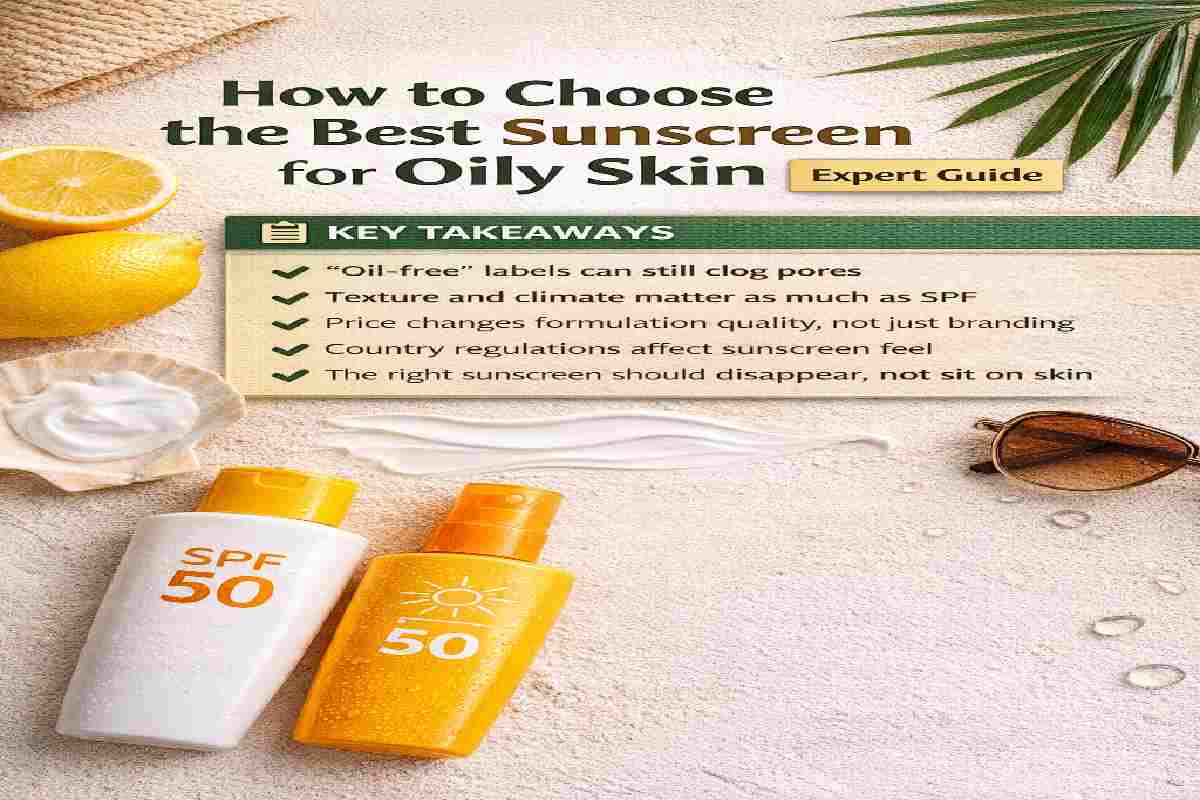
Key Takeaways
Oily skin reacts to texture, not SPF strength
Climate affects how sunscreen behaves on skin
Higher price often improves cosmetic elegance
Ingredient balance matters more than brand name
The right sunscreen should feel invisible
Why Sunscreen Feels Different on Oily Skin
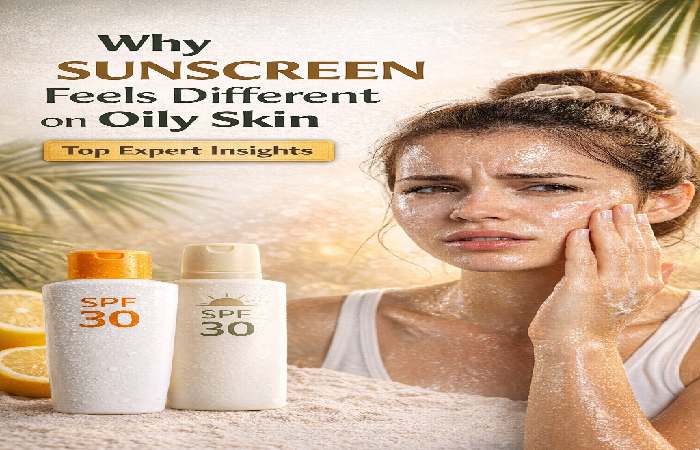
Oily skin produces more sebum throughout the day. Sunscreen adds another layer on top.
When formulas are too occlusive:
Sebum gets trapped
Pores feel congested
Shine increases
This is why many people say, “Sunscreen breaks me out,” when the real issue is formula mismatch, not sunscreen itself.
Ingredients That Help (and Hurt) Oily Skin
Ingredients that usually work well
Lightweight chemical UV filters
Silica or starch (oil-absorbing powders)
Fast-evaporating solvents
Ingredients that often cause issues
Heavy plant oils
Thick butters
High concentrations of occlusive waxes
Key insight:
Two sunscreens can both be “oil-free” yet behave completely differently on oily skin.
Texture Matters More Than SPF for Oily Skin
| Texture Type | How It Feels | Oily Skin Verdict |
|---|---|---|
| Gel | Cooling, fast-drying | Excellent |
| Fluid | Lightweight, spreadable | Very good |
| Lotion | Moisturizing | Depends on climate |
| Cream | Rich, occlusive | Usually poor |
SPF 30 vs SPF 50 matters less than how evenly you apply and reapply.
Climate & Country Differences in Sunscreen Performance
Humidity changes everything.
In tropical countries, heavy sunscreens feel suffocating
In dry climates, ultra-matte formulas can dehydrate skin
Regulations also affect texture:
US sunscreens feel heavier
Asian sunscreens prioritize cosmetic elegance
EU formulas balance protection and feel
Competitive Beauty Table: Countries × Brands × Pricing (Illustrative)
| Country | Common Brand Style | Price Range | Oily Skin Experience |
|---|---|---|---|
| USA | High protection, thicker | $$$ | Durable but shiny |
| South Korea | Gel & fluid | $$ | Lightweight, matte |
| Japan | Watery essence | $$ | Invisible finish |
| France | Balanced lotion | $$$ | Comfortable, stable |
| India | Gel-cream hybrids | $–$$ | Climate-adapted |
Brand formulation styles (not endorsements)
La Roche-Posay – protection-focused
Neutrogena – accessible, mixed textures
Biore – ultra-light
COSRX – skin-friendly textures
Minimalist – ingredient-transparent
How Specialists Evaluate Sunscreen for Oily Skin
Dermatologists look at:
UV coverage stability
Acne compatibility
Cosmetic chemists look at:
Film-forming behavior
Evaporation rate
Consumers should look at:
Shine after 2–3 hours
Breakout patterns over 7 days
How to Choose the Right Sunscreen for YOU
Step-by-step checklist
Identify your climate (humid or dry)
Choose gel or fluid textures first
Patch test for 3 days
Observe shine, not just breakouts
Example:
If you live in a humid city and wear makeup, a fast-drying gel sunscreen will outperform a high-SPF cream every time.
Limitations & Honest Trade-Offs
Matte sunscreens may need more reapplication
Lightweight formulas can cost more
No sunscreen is 100% invisible on all skin tones
This is normal and manageable.
Final Verdict
Choosing a sunscreen for oily skin is a skill, not a product hunt. When you understand formulation, texture, and climate, sunscreen stops being a problem—and starts being effortless.
FAQs
1. Is SPF 50 better than SPF 30 for oily skin?
Not necessarily. SPF 30 is sufficient if applied correctly; texture and reapplication matter more for oily skin.
2. Can oily skin skip sunscreen?
No. Oily skin still needs UV protection to prevent pigmentation and premature aging.
3. Are gel sunscreens always best for oily skin?
Often yes, but some fluids and lotions can also work depending on climate.
4. Does sunscreen cause acne on oily skin?
Poorly matched formulas can. The issue is texture and occlusion, not sunscreen itself.
5. Is mineral sunscreen bad for oily skin?
Not bad, but often heavier and more visible than chemical options.
6. How much sunscreen should oily skin use?
A full face requires about two finger lengths, regardless of skin type.
7. Can I use the same sunscreen indoors?
Yes, especially if exposed to daylight or screens near windows.
8. Do expensive sunscreens work better?
They often feel better, but protection depends on correct usage.
9. Should oily skin reapply sunscreen?
Yes, especially outdoors or after sweating.