

Table of Contents
What is a Morning Skincare Routine for Glowing Skin
A morning skincare routine for glowing skin is a simple, daily skincare process designed to cleanse, hydrate, protect, and brighten the skin before you start your day. It focuses on removing overnight oil and impurities, replenishing moisture, and shielding the skin from environmental damage such as UV rays, pollution, and dust. By using the right products—like a gentle cleanser, a brightening serum, a lightweight moisturiser, and sunscreen—this routine helps improve skin texture, even out skin tone, and maintain a healthy, natural glow throughout the day. Over time, a consistent morning skincare routine prevents dullness, reduces pigmentation, and supports long-lasting radiance rather than temporary shine.
Why Morning Skincare Matters for Glowing Skin
Your skin is exposed to UV rays, pollution, blue light, heat, and humidity every single day. Morning skincare is not about “repair”—that’s nighttime’s job. The goal in the morning is protection + prevention, which directly impacts:
- Skin brightness
- Even tone
- Pigmentation control
- Long-term aging
A proper morning routine focuses on gently cleansing, deeply hydrating, strengthening the skin barrier, and protecting against sun damage.
Step-by-Step Morning Skincare Routine for Glow
Step 1: Gentle Cleanser (Clean, Not Stripped)
Over-cleansing in the morning is one of the biggest glow-killers. Your skin doesn’t need harsh foaming washes after sleep.
What to look for
- Low-foam or non-foaming
- pH-balanced
- Sulfate-free
Climate tip
- India & humid regions → gel or water-based cleanser
- US/UK & colder climates → creamy or hydrating cleanser
Reliable options
- Simple Refreshing Face Wash (budget, all skin types)
- Cetaphil Gentle Skin Cleanser (dry & sensitive skin)
If your skin feels tight after cleansing, glow will never happen—no matter what serum you use.
Step 2: Hydrating Toner (Optional, But Glow-Boosting)
A toner isn’t mandatory, but it helps prep the skin and improve absorption, especially if your skin feels dull or dehydrated.
Best toner ingredients for glow
- Rose water
- Hyaluronic acid
- Aloe vera
- Centella asiatica
Popular choices
- Plum Rose Water Toner (India, budget)
- Klairs Supple Preparation Toner (global, sensitive skin)
Step 3: Vitamin C Serum (The Glow Ingredient)
If there’s one ingredient consistently recommended by dermatologists for morning glow, it’s Vitamin C.
Why Vitamin C matters
- Brightens dull skin
- Fades dark spots
- Protects against pollution & UV damage
- Boosts sunscreen effectiveness
Choose strength based on geography
- Hot & humid climates → 5–10% Vitamin C
- Cool climates → 10–15% Vitamin C
Vitamin C comparison
| Brand | Strength | Best For |
| Minimalist Vitamin C 10% | 10% | Beginners |
| La Roche-Posay Pure Vitamin C10 | 10% | Sensitive skin |
| The Ordinary Ascorbyl Glucoside | Gentle | Budget glow |
Glow from Vitamin C is subtle but cumulative—expect visible brightness in 2–4 weeks.
Step 4: Moisturiser (Glow Lives in the Skin Barrier)
Glowing skin is hydrated, balanced skin, not oily skin.
Moisturizer selection
- Oily skin → gel or oil-free lotion
- Dry skin → ceramides, glycerin, squalane
Tried-and-tested
- Pond’s Super Light Gel (humid climates)
- CeraVe Moisturising Cream (dry climates)
Step 5: Sunscreen (The Real Glow Secret)
No sunscreen = no glow. This is non-negotiable.
Why sunscreen is critical
- Prevents pigmentation & tanning
- Slows premature aging
- Protects collagen
Choose based on skin type
- Sensitive skin → mineral sunscreen
- Oily skin → gel or matte sunscreen
Types of Skin Tones and What to Use
| Skin Tone | Fitzpatrick Type | Melanin Level & Biological Behavior | Primary Risks | What to Use (Evidence-Backed Ingredients) | What to Avoid / Limit |
| Fair | I–II | Low melanin; minimal natural UV protection; faster collagen breakdown | Sunburn, redness, premature aging | Broad-spectrum sunscreen SPF 30–50; Vitamin C 5–10%; ceramides; glycerin; niacinamide 2–5% | Daily strong exfoliation; high-strength acids without recovery |
| Medium / Olive | III–IV | Moderate melanin; melanocytes react strongly to inflammation | Uneven tanning, melasma, PIH | Vitamin C 10–15%; niacinamide 4–5%; alpha arbutin; tranexamic acid; SPF 30+ | Treating pigmentation without inflammation control; inconsistent sunscreen |
| Brown | V | High melanin; strong UV filtering; reactive pigment response | Persistent dark marks, acne-related PIH | Niacinamide; azelaic acid; Vitamin C derivatives; lightweight SPF 30+ | Aggressive peels; frequent high-% AHAs |
| Deep | VI | Very high melanin; lowest visible photoaging; highest PIH risk from irritation | Long-lasting dark spots, uneven tone | Barrier-repair moisturizers (ceramides, cholesterol); azelaic acid; licorice extract; gentle exfoliation; SPF 30+ | Over-treating spots; alcohol-heavy or fragranced formulas |
Top 3 Morning Skincare For Glowing Skin Brands Listed Globally
| Country | Brand | Why It’s Popular for Glow | Typical Price Range |
| 🇮🇳 India | Plum | Known for clean, brightening serums and hydration-focused products popular locally. | ₹250 – ₹1,000 per item |
| The Derma Co. | Clinical, India-focused actives that target dark spots and uneven tone. | ₹500 – ₹2,000 | |
| Minimalist | Ingredient-forward brand with affordable Vitamin C, niacinamide, and barrier serums. | ₹600 – ₹1,200 | |
| 🇬🇧 United Kingdom | No. 7 | Iconic British skincare with brightening and anti-ageing ranges trusted by many UK consumers. | ~£15 – £40 |
| La Roche-Posay | Derm-trusted French brand widely available in UK with SPF, anti-darkspot, and radiance boosters. | ~£15 – £45 | |
| The Inkey List | High-value active serums (Vitamin C, niacinamide) with strong popularity among UK skincare enthusiasts. | ~£10 – £25 | |
| 🇺🇸 United States | CeraVe | Dermatologist-recommended barrier repair line that supports healthy, hydrated skin essential for glow. | ~$10 – $25 |
| The Ordinary | Affordable actives (Vitamin C, niacinamide) with global cult status for brightening. | ~$8 – $20 | |
| Glow Recipe | K-Beauty-inspired hydration and antioxidant products that support radiant skin. | ~$20 – $50 | |
| 🇪🇺 Europe | La Roche-Posay | Highly recognised across Europe for sunscreens and brightening serums — common dermatology favourite. | ~€15 – €45 |
| Vichy | French dermocosmetic brand with hydration and radiance-focused serums and creams. | ~€15 – €40 | |
| Bioderma | Strong presence in Europe with gentle yet effective formulations for hydration and glow. | ~€10 – €35 | |
| 🇨🇦 Canada | CeraVe | Barrier & hydration staple, trusted in Canadian pharmacies and key for healthy glowing skin. | ~CAD $12 – $30 |
| The Ordinary | Affordable actives widely available in Canadian retailers. | ~CAD $10 – $25 | |
| The Face Shop | K-Beauty brand known for hydration and glow products distributed in Canada. | ~CAD $15 – $40 |
Dermatologists consistently emphasize that sunscreen is the most important step in any morning skincare routine for preventing pigmentation and premature aging.
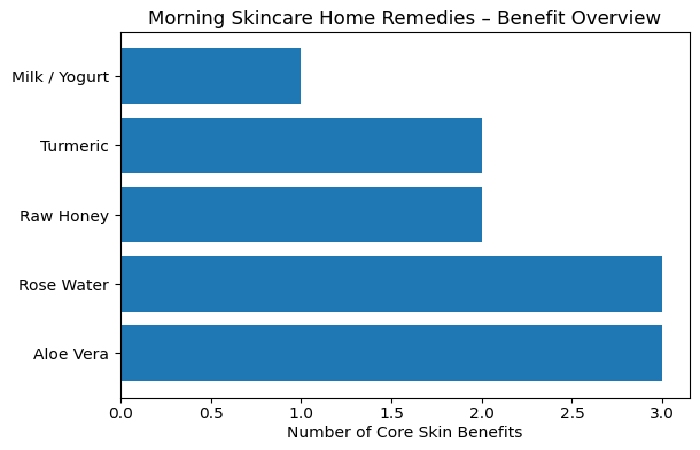
Morning Skincare Home Remedies – Overview In Graph
Global Reviews: Morning Skincare Products for Glowing Skin
| Country / Region | Brand / Product Type | What Users Like (Pros) | Common Complaints (Cons) | Glow Result (User Consensus) |
| 🇮🇳 India | Plum – Vitamin C & Moisturizers | Lightweight, visible brightness in 2–4 weeks, budget-friendly, suits Indian climate | Mild tingling for sensitive skin, fragrance not liked by all | ⭐ Visible glow & even tone with consistent use |
| Minimalist – Vitamin C / Niacinamide | Ingredient transparency, no fragrance, good for beginners | Results slower for stubborn pigmentation | ⭐ Healthy glow, barrier improvement | |
| 🇬🇧 UK | The Inkey List – Antioxidant Serums | Affordable, fast absorption, improves skin clarity | Packaging issues reported by some users | ⭐ Subtle glow, good hydration |
| No.7 – Moisturizers & Serums | Trusted brand, gentle, improves radiance over time | Slower visible results vs actives | ⭐ Natural, gradual glow | |
| 🇺🇸 USA | CeraVe – Cleansers & Moisturizers | Dermatologist-recommended, barrier repair, non-irritating | Not an “instant glow” product | ⭐ Healthy, plump skin glow |
| Glow Recipe – Dew Drops / Serums | Instant dewy finish, makeup-friendly glow | Sticky feel for oily skin, pricey | ⭐ Immediate cosmetic glow | |
| 🇪🇺 Europe | La Roche-Posay – Vitamin C & SPF | Gentle, suitable for sensitive skin, derm-backed | Higher price, subtle results | ⭐ Long-term radiance & tone balance |
| Bioderma – Moisturizers & Micellar | Soothing, reduces dullness, barrier safe | Not targeted for pigmentation | ⭐ Soft, healthy glow | |
| 🇨🇦 Canada | CeraVe – Hydrating Cleanser | Excellent hydration, winter-friendly, non-stripping | No instant brightness | ⭐ Consistent skin comfort & glow |
| The Ordinary – Vitamin C / Niacinamide | Affordable actives, customizable routines | Can irritate if misused | ⭐ Noticeable brightness with correct use |
FAQs: Morning Skincare Routine for Glowing Skin
- What is the best morning skincare routine for glowing skin?
The best morning skincare routine for globally glowing skin follows four steps: gentle cleansing, antioxidant protection (like Vitamin C), moisturising, and broad-spectrum sunscreen. This sequence protects the skin barrier, prevents dullness, and maintains long-term radiance.
- Is a morning skincare routine different from a night routine?
Yes. A morning skincare routine focuses on protection (UV rays, pollution, free radicals), while a night routine focuses on repair and regeneration using actives like retinol or exfoliating acids.
- Do I really need sunscreen for glowing skin?
Absolutely. Sunscreen is the most important product for glow. Without daily SPF, skin develops pigmentation, dullness, and premature aging—even if you use the best serums.
- Which ingredient is best for glow in the morning?
Globally, Vitamin C is the most recommended morning ingredient because it:
- Brightens skin
- Evens tone
- Boosts sunscreen protection
- Defends against pollution
- Can I skip moisturizer in the morning?
No. Hydrated skin reflects light better, which is what we perceive as glow. Even oily skin needs a lightweight gel or lotion to maintain barrier health and prevent dullness.
- How does climate affect a morning skincare routine?
Climate changes texture and strength, not steps:
- Hot/humid regions (India, SEA): gel moisturizers, lower Vitamin C %
- Cold/dry regions (Canada, Europe): cream moisturizers, ceramides
The routine structure remains the same globally.
Conclusion
A morning skincare routine for glowing skin is not about complexity or expensive products; it is about consistency, protection, and maintaining skin health. Across the world—from India and the UK to the USA, Europe, and Canada—dermatologists and real user experiences agree that glow is a visible sign of a strong skin barrier and effective daily protection. The most successful routines follow a simple structure: gentle cleansing to remove overnight oil and sweat, antioxidant protection to defend against pollution and free-radical damage, adequate moisturization to maintain hydration, and daily sunscreen to prevent pigmentation and premature aging. This sequence remains universal, even though product textures and strengths vary by climate and skin type
Author Bio:
Sarvar Shareef is a content strategist and SEO‑driven writer with 5+ years of experience creating high‑intent content across technology, health, beauty, and marketing. Drawing on a background in data‑informed keyword research and on‑page optimization, Sarvar specialises in turning complex topics into clear, actionable articles that both rank and convert. His work spans product guides, industry trend analysis, how‑to resources, and brand storytelling for blogs, agencies, and SaaS companies, with a strong focus on user trust, evidence‑based insights, and long‑term organic growth.