
Table of Contents
Introduction
Understanding the Korean Skincare Steps can truly make skincare feel like less of a minefield. Korean skincare instead encourages the same principles regardless of how much we’ve previously spent on some unknown ingredient, a multi step facial etc. Which is consistency, gentle, lightweight product layering and doing them in the right sequence.
We break down every step so that whether you have sensitive, dry, oily or combination skin, you know when each one is working to get the best results from your own unique face (that we aren’t the only ones getting).</b>
What Is a Korean Skincare Routine?
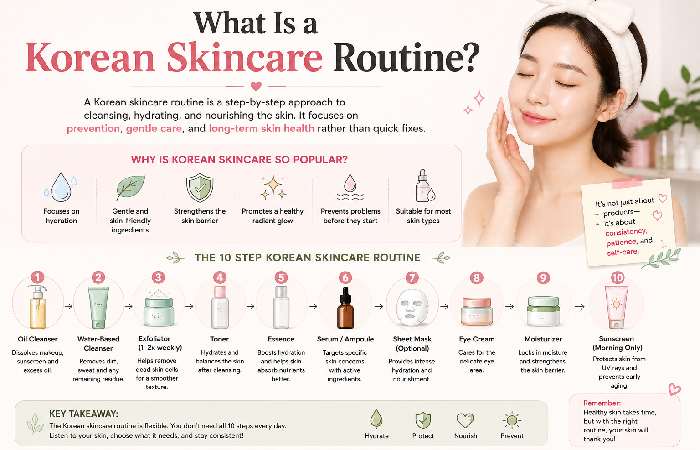
Here is how to create a Korean skin care routine. It’s designed to cleanse, hydrate, and replenish skin for a healthy look.
Preventing the emergence of skin issues Strengthening the skins own natural abilities to protect itself. Hydration Ingredients are typically mild and gentle on the skin. * Maintain routine daily. Most commonly we hear people refer to “the 10 steps” not very many actually implement all the steps everyday… I also found that your dermatologist also recommends not actually using all 10 steps everyday- tailor fit to your specific needs .
Why Is Korean Skincare So Popular?
So why is K-Beauty all the rage in the world, and K-beauty tips widely shared:
It has formulations that are Lightweight . It uses most nourishing elements and processes while cleansing the skin . Its Texture</b>is an absolute wow, which nobody has heard of earlier. Beauty is preventive and not just about fixing things; and most of the skin types will have products that’d help it!
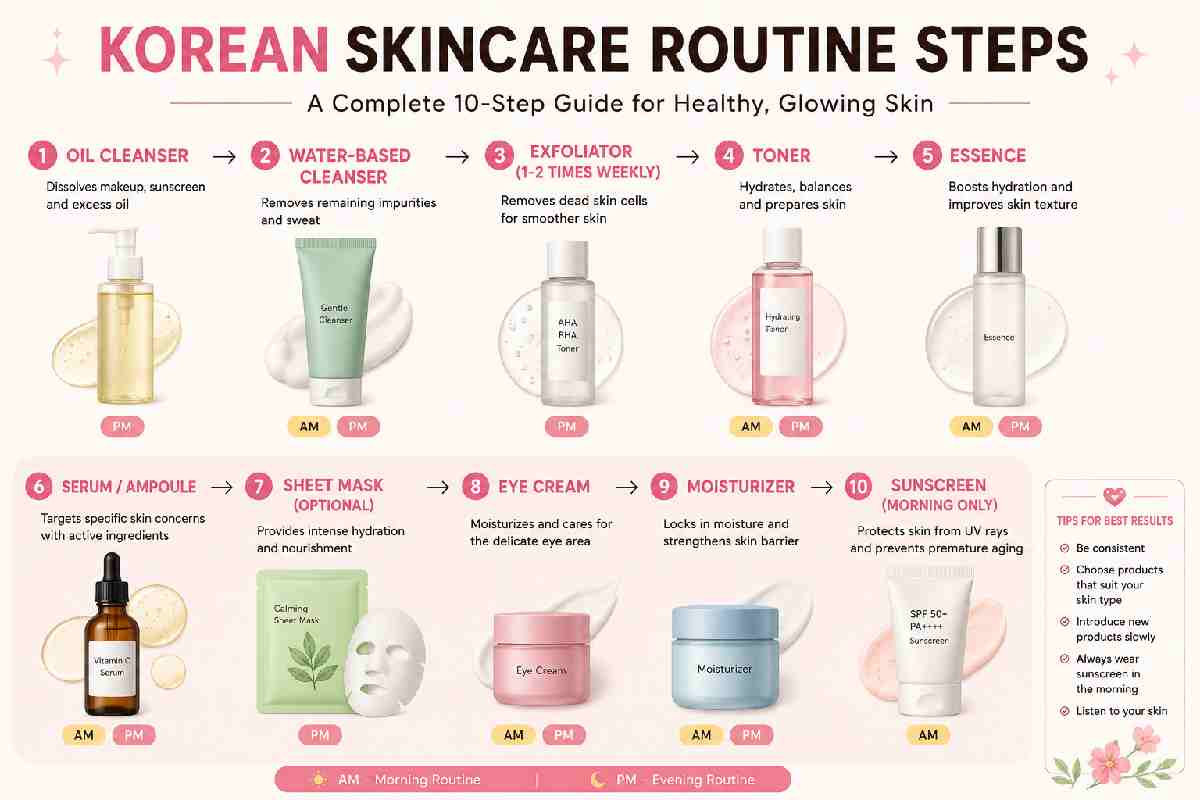
Korean Skincare Routine Steps Explained
Step 1: Oil Cleanser
An oil cleanser removes:
- Sunscreen
- Makeup
- Excess sebum
- Waterproof products
It works by dissolving oil-based impurities without stripping the skin.
Best for:
- Evening routine
- Oily skin
- Combination skin
- People who wear sunscreen daily
Step 2: Water-Based Cleanser
The second cleanse removes:
- Sweat
- Dirt
- Pollution
- Remaining residue
Choose a cleanser that matches your skin type.
| Skin Type | Recommended Cleanser |
|---|---|
| Dry | Cream cleanser |
| Oily | Foaming cleanser |
| Sensitive | Low-pH gel cleanser |
| Combination | Gentle gel cleanser |
Step 3: Exfoliation (1–2 Times Weekly)
Exfoliation removes dead skin cells and promotes smoother skin.
Common exfoliants include:
- AHAs
- BHAs
- PHAs
- Enzyme exfoliants
Avoid over-exfoliating, as it can damage the skin barrier.
Step 4: Toner
Unlike traditional alcohol-heavy toners, Korean toners primarily hydrate the skin.
Benefits include:
- Restores moisture
- Balances skin
- Improves absorption of later products
- Reduces dryness
Step 5: Essence
Essence is one of the signature products in Korean skincare.
Its purpose is to:
- Hydrate deeply
- Improve skin texture
- Support repair
- Enhance skin radiance
Essence typically has a lightweight, watery texture.
Step 6: Serum or Ampoule
Serums target specific skin concerns.
Examples include:
| Concern | Ingredient |
|---|---|
| Dark spots | Niacinamide |
| Fine lines | Peptides |
| Dehydration | Hyaluronic Acid |
| Acne | Salicylic Acid |
| Redness | Centella Asiatica |
Step 7: Sheet Mask (Optional)
Sheet masks provide temporary hydration and soothing benefits.
Most people only need them:
- Once weekly
- Before special occasions
- After travelling
- During dry weather
They are optional rather than essential.
Step 8: Eye Cream
Eye creams help moisturise the delicate skin around the eyes.
Some formulations may target:
- Dryness
- Puffiness
- Fine lines
However, they are not essential if your facial moisturiser is suitable for the eye area.
Step 9: Moisturiser
Moisturiser seals hydration into the skin.
It helps:
- Strengthen the skin barrier
- Prevent moisture loss
- Improve comfort
- Reduce dryness
Different textures suit different skin types.
Step 10: Sunscreen (Morning Only)
Sunscreen is arguably the most important daytime skincare step.
Daily SPF helps protect against:
- UV damage
- Premature ageing
- Pigmentation
- Sunburn
Dermatologists generally recommend SPF 30 or higher for everyday use.
Korean Morning vs Evening Routine
| Morning Routine | Evening Routine |
|---|---|
| Gentle cleanser | Oil cleanser |
| Toner | Water cleanser |
| Essence | Toner |
| Serum | Essence |
| Moisturiser | Serum |
| Sunscreen | Moisturiser |
Workflow: Building Your Own Korean Skincare Routine
Identify Skin Type
        ↓
Choose Gentle Cleanser
        ↓
Add Hydrating Toner
        ↓
Select One Treatment Serum
        ↓
Use Moisturiser Daily
        ↓
Apply Sunscreen Every Morning
        ↓
Introduce Additional Steps Slowly
Comparison Table: Minimal vs Full Korean Routine
| Feature | Simple Routine | Full Routine |
|---|---|---|
| Steps | 4–5 | 8–10 |
| Time Required | 5 minutes | 20 minutes |
| Suitable for Beginners | Yes | Sometimes |
| Product Cost | Lower | Higher |
| Maintenance | Easy | Moderate |
| Daily Practicality | Excellent | Depends on lifestyle |
Choosing a Routine by Skin Type
Dry Skin
Prioritise:
- Cream cleansers
- Hydrating toner
- EssenceRich moisturiser
Oily Skin
Choose:
- Gel cleanser
- Lightweight toner
- Niacinamide serum
- Oil-free moisturiser
Combination Skin
Focus on:
- Lightweight hydration
- Balanced cleansing
- Spot treatment where needed
Sensitive Skin
Look for:
- Fragrance-free products
- Centella Asiatica
- Ceramides
- Minimal exfoliation
Expectations: How Long Before You See Results?
Results vary depending on your skin concerns.
| Goal | Typical Timeframe |
|---|---|
| Better hydration | Few days |
| Improved texture | 2–4 weeks |
| Reduced redness | Several weeks |
| Fading pigmentation | 2–3 months |
| Fine lines | Several months |
Consistency is more important than using many products.
Pros and Limitations
Advantages
- Encourages healthy habits
- Gentle on most skin types
- Focuses on prevention
- Highly customisable
- Supports skin barrier health
Limitations
- Not everyone needs all ten steps
- Can become expensive
- Too many products may irritate sensitive skin
- Results require patience
- Product layering takes time
Common Mistakes to Avoid
- Introducing too many products at once
- Skipping sunscreen
- Over-exfoliating
- Using products unsuitable for your skin type
- Expecting overnight improvements
Buying Tips
Before purchasing Korean skincare products:
- Read ingredient lists carefully.
- Patch test new products.
- Choose products suitable for your skin type.
- Buy from reputable retailers to reduce the risk of counterfeit items.
- Introduce one new product at a time so you can identify any reactions.
Alternatives to the Traditional 10-Step Routine
Many people benefit from a simplified routine:
Morning
- Cleanser
- Toner
- Serum
- Moisturiser
- Sunscreen
Evening
- Oil cleanser (if wearing sunscreen or makeup)
- Water cleanser
- Toner
- Serum
- Moisturiser
This streamlined approach is easier to maintain while still covering the essentials.
Frequently Asked Questions
Is it necessary to follow all 10 steps in the Korean skincare routine? Absolutely not! You’ll likely only need 4–6 core steps.
You can incorporate additional products into your routine as needed.
Who can do Korean skincare routine steps?
Anyone can adopt a Korean routine. If you are just beginning, your must haves are Moisturizer, Sunscreen and Cleanser and then add Toners,Essence to slowly start your regime.252 reviews Is Korean skincare good for sensitive skin? The ingredients in most of our favorite Korean brands tend to be very moisturizing and soothing, so I think most are, but of course you should patch test!
When should I exfoliate?
It’s usually good practice to exfoliate 1-2 times a week to prevent from damaging your skin.
Conclusion
The Korean routine isn’t really about 10 particular items so much as finding products which are right for your skin. For many, a simpler routine of double cleansing, hydrating toners, basic mositurisers, and morning sun protection, will farout-strip a complicated and more sporadic approach to 10 (and often more) products. Begin with this simple foundation and add others incrementally as your skin demands.