
Table of Contents
Introduction
Dress code guidelines for women work best when treated as contextual decisions—not fixed rules—balancing professionalism, culture, comfort, and personal agency.
Problem: Many women struggle to dress “appropriately” because guidelines are vague or outdated.
Agitation: One wrong outfit can invite judgment, discomfort, or self-doubt.
Solution: A context-first approach that adapts to place, purpose, and personal reality.
Direct answer: There is no single correct dress code for women—only informed choices based on where you are, what you’re doing, and who you’re engaging with.
Key Takeaways
Dress codes are contextual, not moral rules.
Geography and culture matter.
Comfort improves confidence and performance.
Industry and seniority change expectations.
Frameworks beat rigid fashion rules.
Why Dress Code Guidelines Are Often Misunderstood
Most online advice reduces women’s clothing to restrictive lists. This ignores climate, culture, and power dynamics—making dress codes feel oppressive rather than helpful.
A Context-First Framework for Women’s Dress Codes
Use this decision lens:
Occasion: Work, ceremony, leisure, travel.
Culture: Local norms and sensitivities.
Industry: Finance ≠ creative ≠ tech.
Authority Level: Expectations rise with visibility.
Comfort & Climate: Function matters.
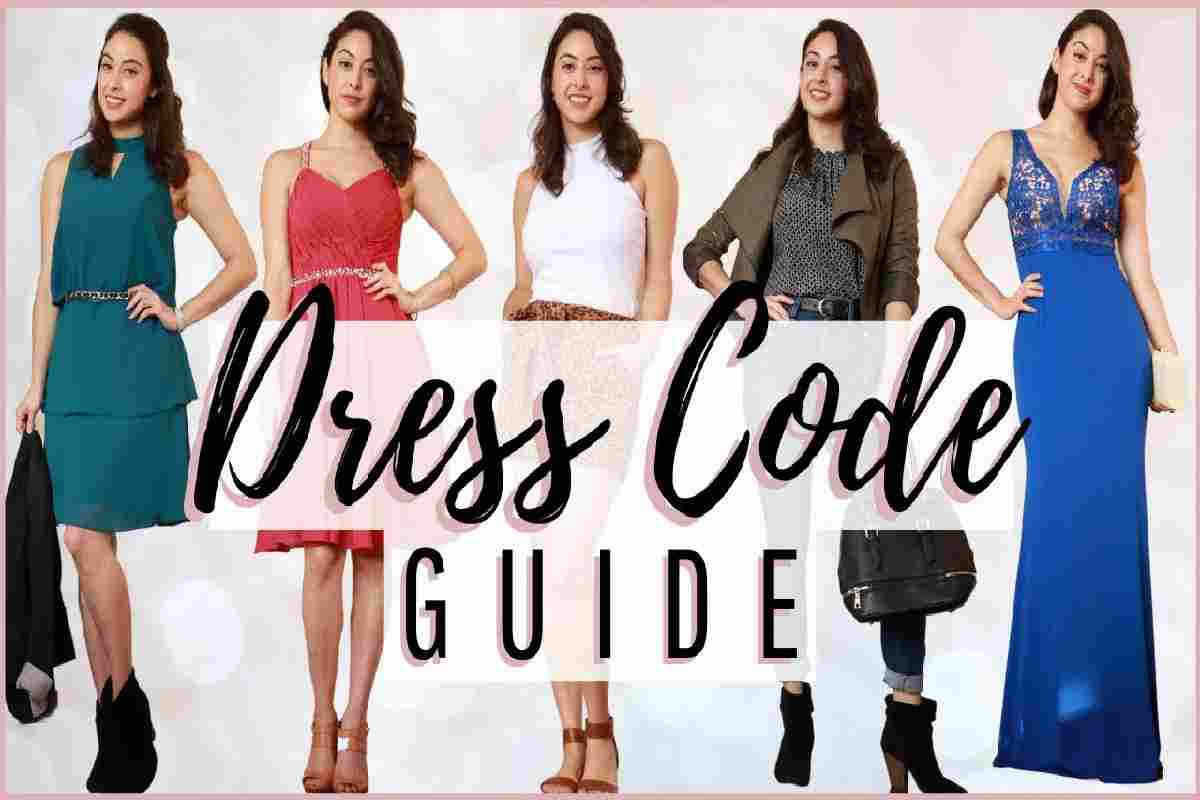
Dress Code Guidelines by Occasion
Workplace
Corporate: Structured silhouettes, neutral colors.
Startups: Smart casual, flexible expression.
Creative: Style is part of credibility.
Formal Events
Prioritize fit and fabric over trendiness.
Cultural cues matter more than fashion cycles.
Casual & Social
Casual ≠ careless.
Clean, intentional outfits always win.
Travel & Public Spaces
Modesty and safety vary by country.
Adaptation is awareness, not submission.
Country-Wise Dress Code Comparison (Women)
| Country | General Expectation | Cultural Sensitivity | Workwear Tone | Climate Factor |
|---|---|---|---|---|
| USA | Flexible, expressive | Low–Medium | Business casual | Seasonal |
| UK | Polished, understated | Low | Formal-leaning | Cold |
| India | Modest, elegant | High | Conservative | Hot |
| UAE | Modest, structured | Very High | Formal | Hot |
| France | Minimal, chic | Medium | Elegant | Mild |
Brand-Level Dress Code Signaling (Women’s Fashion)
| Brand | Style Signal | Price Range (Approx) | Best For | Availability |
|---|---|---|---|---|
| Zara | Trend-led professional | $30–$120 | Office casual | Global |
| H&M | Budget formal basics | $20–$90 | Entry-level workwear | Global |
| Marks & Spencer | Classic corporate | $50–$150 | Office formal | UK/India |
| Uniqlo | Functional minimalism | $30–$100 | Everyday work | Global |
| FabIndia | Ethnic-professional | $40–$130 | Indian workplaces | India |
Beauty & Styling Support Table (Optional Layer)
| Category | Specialists | Reviews | Locations | Pricing |
|---|---|---|---|---|
| Styling | Personal stylists | 4.5★ avg | US, UK, India | Medium |
| Grooming | Salon experts | 4★+ | Global | Low–High |
Common Mistakes Women Make
Dressing for the role they want without reading the room.
Ignoring comfort and climate.
Over-correcting for modesty or trendiness.
Build Your Personal Dress Code System
Define 3 environments you dress for most.
Create a 10-item capsule per environment.
Test outfits in low-risk settings first.
FAQs
What are dress code guidelines for women?
They are context-based recommendations that help women dress appropriately for specific environments, cultures, and occasions.Do dress codes differ by country?
Yes. Cultural expectations, climate, and social norms heavily influence what is considered appropriate.Is formal dressing always required at work?
No. Many workplaces now accept smart casual, depending on industry and role.How can women dress professionally and comfortably?
By prioritizing fit, breathable fabrics, and functional footwear without sacrificing polish.Are dress codes restrictive to personal style?
Not inherently. Clear guidelines can actually reduce anxiety and support self-expression.Do senior women face stricter dress expectations?
Often yes, due to visibility and authority expectations.Is modest dressing mandatory everywhere?
Only in certain cultural or religious contexts.How do brands influence dress code norms?
Brands signal acceptability through marketing and office-wear collections.Can casual outfits still be appropriate?
Yes, if they are clean, intentional, and context-aware.Who is this guidance not for?
Those seeking rigid fashion rules without situational thinking.