Table of Contents
Introduction
Hair relaxer are products mend to remove curls and to straighten hair. Women most often use them with curl hair. Hair relaxer products mostly come in the form of lotion n cream in the market. It works by damaging the hair.
Straighten hair without side effects
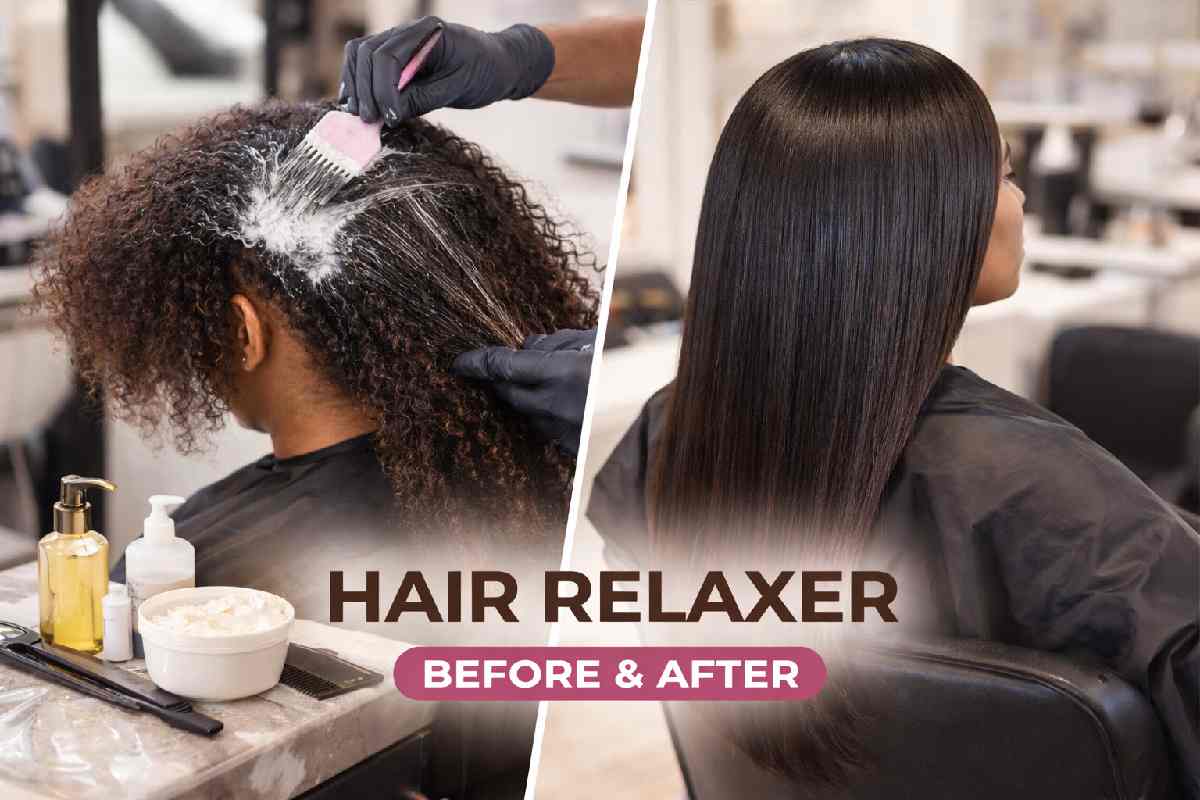
It is fashionable to wear long and straight hair, but not all women are lucky enough to be born with that type of hair.
The permanent straightening can give short-term results, but note that it only lasts a few months.
If this practice is abuse, one of the most severe consequences could be destroying the strands, making them very difficult to handle later.
Only by doing another straightening could you try to show off a “decent” hair again. It is a kind of vicious cycle that you cannot escape from.
Comparison of Natural Hair Relaxer Recipes
Recipe Ingredients | Key Benefit | Application Time |
Coconut Milk & Lemon | Nourishes scalp; acts as a conditioner | A few minutes |
Milk & Bananas | High in Vitamin B6; retains moisture | 1.5 hours (until dry) |
Honey, Oils & Milk | Thick mask for deep treatment | 3 to 4 hours |
Milk, Strawberries & Honey | Provides a delicious aroma while nourishing | 2 hours |
Banana & Papaya | Tropical scent; hydrates the scalp | 1 hour (until dry) |
Some natural hair relaxer you can make at home
Coconut milk and lemon juice
- The mixture would work as a conditioner capable of nourishing the scalp and leaving hair soft.
- To do this, form a cream with a cup of coconut milk (250 ml) and the juice of a lemon.
- Shampoo your hair and apply the mixture into the conditioner to get the effect of Hair relaxer.
- Leave it for a few minutes and rinse well with warm water.
- Repeat it two times a week, and check the result.
Milk and Bananas
- Bananas are a great source of nutrients, including vitamin B6, which significantly benefits your hair.
- In addition, due to its sugar content, it retains the natural moisture of the strands.
- The quantity of both ingredients will depend on the length and the thickness of the hair.
- Banana is pure, and the milk is added until it forms a paste.
- Afterwards, apply to damp hair and leave for an hour and a half (until it dries), rinse and comb well.
Honey, oils, and milk
You can make this mask with elements you have at home or get without problems in the market for Hair relaxer.
Ingredients
- ½ cup of milk (125 ml)
- 1 cup of honey (400 g)
- ½ cup of olive oil (110 g)
- 2 tablespoons of coconut oil
Preparation for mask
- In a pan, place the honey, olive oil, milk, and coconut oil.
- Mix well with a hand mixer and heat over low heat.
Cook until thick. Remove from the fire and let cool. - Apply it to hair from starting to the ends and working up to the roots.
- Put on a plastic cap and leave for3 to 4 hours.
- After that time, wash as usual with shampoo and conditioner using warm water.
Milk, strawberries, and honey
In addition to nourishing the hair, you will get Hair relaxer by adding a delicious strawberry aroma. And it is a straightforward treatment to do.
Ingredients
- 1 cup of milk (250 ml)
- ¼ cup strawberries (50 g)
- 2 tablespoons of honey (50 g)
Preparation
- Wash strawberries and cut them into quarters.
- Place in the blender glass with the milk and honey. Mix well.
- Apply the hair mask to damp hair and leave it on for 2 hours.
- Rinse using shampoo and conditioner and style well while still wet..
Lemon and honey
- It provides moisture and faster healing for minor wounds that you may suffer on your head.
- If you mix it with lemon, get an excellent hydrating hair mask for Hair relaxer
- Combine one tablespoon of honey for every ½ tablespoon of lemon juice, although the quantity of each ingredient will depend on the length and thickness of hair.
- Apply to hair, wrap with a warm towel and leave for 45 minutes. Rinse and style carefully.
Banana and papaya
It is a fresh and aromatic way to hydrate the scalp. You can buy these fruits at any market, and your hair will smell tropical for days.
Ingredients
- One banana
- Half papaya
- 1 tablespoon of honey (25 g)
Preparation
- Cut the banana into slices.
- Remove the pulp from the papaya and then add honey to it
- Make a paste of all three ingredients
- Apply it and leave it for 1 hour until it is completely dry.
- Then you have to wash your hair with warm water and brush it well.
Conclusion
With these homemade and natural hair relaxers, you will nourish your hair, and it will look healthy and beautiful. Please choose the one method you like the most for Hair relaxer and put it into practice. You will notice the results!
Frequently Asked Questions (FAQs) About Hair Relaxer
1. What is a hair relaxer?
A hair relaxer is a chemical hair product used to straighten curly or tightly coiled hair by breaking down the hair’s natural structure. It permanently alters the hair texture, making it straighter and easier to manage.
2. Is hair relaxer permanent or temporary?
Hair relaxers are permanent. Once applied, the treated hair remains straight. However, new hair growth will retain its natural texture and may require touch-ups.
3. Does a hair relaxer damage hair?
Yes, hair relaxers can cause damage if not used correctly. Overprocessing, frequent touch-ups, or improper aftercare can lead to dryness, breakage, and thinning.
4. How long does a hair relaxer last?
A relaxer lasts as long as the treated hair remains on your head. Most people need a touch-up every 6–8 weeks to relax new hair growth.
5. Can I use a hair relaxer on colored or bleached hair?
It’s risky. Using a relaxer on chemically colored or bleached hair increases the chance of severe breakage. A professional consultation is strongly recommended.
6. Is hair relaxer safe for the scalp?
Hair relaxers can irritate the scalp if left on too long or applied incorrectly. Burns and sensitivity are possible, which is why protective base creams and patch tests are essential.