
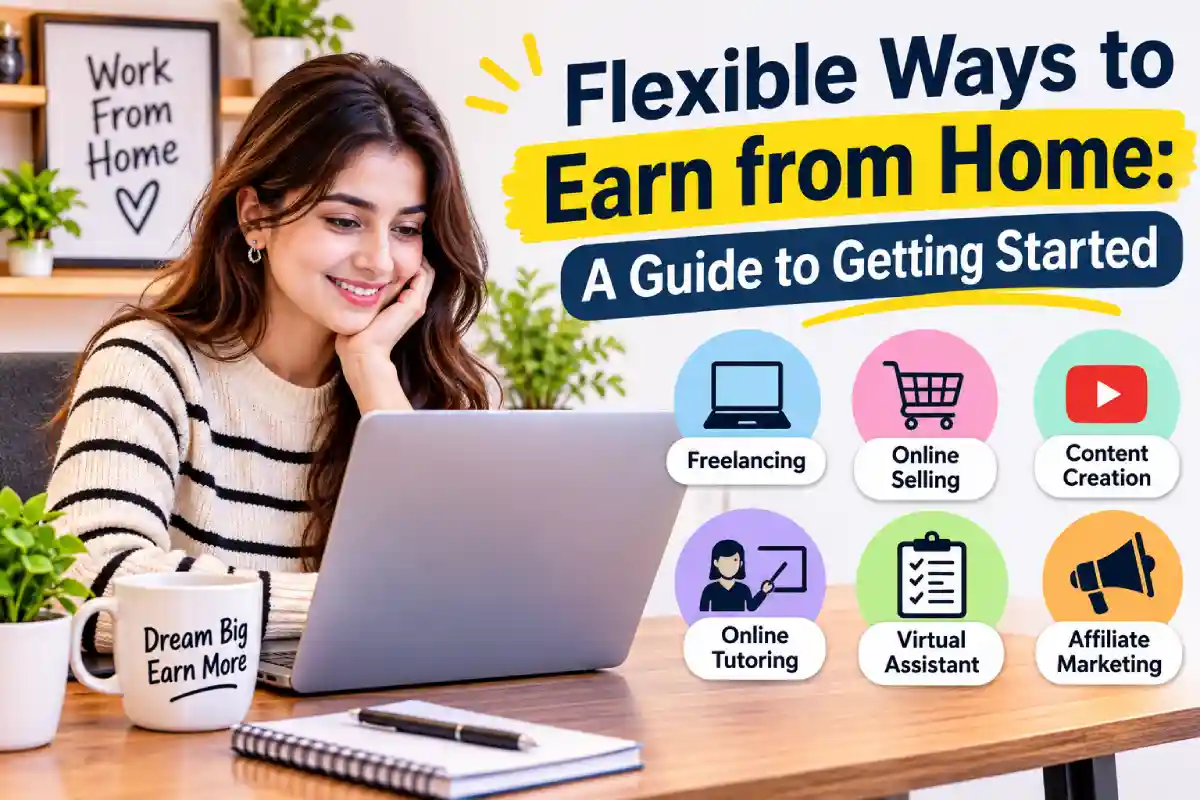
Working from home is no longer unusual. Millions of people in the UK now earn some or all of their income remotely, whether through freelancing, online businesses or creative work. For anyone looking for more control over their hours, home-based work can be a practical option, as long as it is approached with planning and realistic expectations.
Table of Contents
Why flexible work appeals
- Control over your schedule. Work can fit around study, caring responsibilities or another job.
- No commute. More time and less money spent on travel.
- Choice of workspace. You decide how and where you work best.
- Room to grow. Many home-based roles can start part-time and expand over time.
Popular ways to work from home
There is a wide range of options, depending on your skills and interests:
- Freelance services. Writing, design, editing, translation, bookkeeping and virtual assistance.
- Online teaching and tutoring. Teaching languages, school subjects or specialist skills over video.
- Selling online. Running a small shop for handmade, vintage or resold goods.
- Content creation. Making videos, streaming, podcasting or building an audience on social platforms.
- Live online work. Customer service, coaching and live entertainment roles, including streaming and cam modelling for adults who choose it.
Each option has different start-up costs, earning potential and time commitments, so it is worth researching a few before committing.
What you need to get started
Most home-based work needs only a few basics:
- A reliable laptop or computer.
- A fast, stable internet connection.
- A quiet, comfortable workspace.
- Good lighting and a decent microphone if your work involves video.
Start small and invest in better equipment once you know the work suits you.
Choosing reputable platforms and partners
Many people find work through online platforms, marketplaces or agencies. Before signing up, check how and when payments are made, what fees or commission are taken and what support is available. Read reviews from other users and be wary of anything that asks for large upfront payments or promises guaranteed income. If something looks suspicious, Action Fraud explains how to report it.
Protecting your privacy and wellbeing
Working online means sharing some information, so be careful about what you reveal. Keep personal and work accounts separate, use strong passwords and two-factor authentication, and never share your home address publicly. Set working hours, take regular breaks and keep a healthy balance between screen time and time away from work.
Treat it as self-employment
Most home-based workers in the UK are self-employed, which means registering for Self Assessment, keeping records of income and expenses and putting money aside for tax and National Insurance. Some costs, such as equipment, internet and a portion of household bills, may be allowable expenses. Keeping simple records from day one makes the annual tax return far easier.
Building a steady income
Income from home-based work often starts slowly. Consistency, good communication and building a reputation with clients or an audience are what turn occasional earnings into a steady income. Set clear goals for the first three to six months and review what is working.
Flexible home-based work can offer real freedom, as long as you choose reputable partners, protect your privacy and treat it like a business from the start.
FAQs
What is the easiest way to start working from home?
Freelancing with skills you already have, such as writing, admin or design, is often the quickest way to start.
Do I need to tell HMRC about income from home-based work?
Yes. If you are self-employed and earn more than the trading allowance, you usually need to register for Self Assessment.
How can I avoid work-from-home scams?
Be cautious of jobs that ask for upfront fees, promise guaranteed earnings or pressure you to decide quickly.
Can I work from home alongside another job?
Yes. Many people start part-time while keeping their main job, then grow their home-based income over time.
How much can I earn working from home?
Earnings vary widely depending on the type of work, your skills and the hours you put in. Most people find income builds gradually as they gain experience, clients or an audience.
Do I need a dedicated office?
Not necessarily, but a consistent workspace, even a corner of a room, helps with focus and makes it easier to switch off at the end of the day.
Is it better to use a platform or find clients directly?
Platforms make it easier to find work when starting out, while direct clients usually mean lower fees. Many people use both.