
Table of Contents
Introduction
Kojic skin whitening soap does not bleach skin; it works by slowing excess melanin production, and results depend on formulation quality, skin type, and disciplined use.
Many people try kojic soap expecting a dramatic shade change. When that doesn’t happen—or irritation appears—the product gets blamed. The real issue is misunderstanding what kojic soap can realistically do. Used correctly, it can fade pigment problems. Used blindly, it damages the skin barrier and worsens discoloration.
This guide explains the science, the limits, and the smartest way to use kojic soap without harming your skin.
Key Takeaways
Kojic soap targets pigment overproduction, not natural skin color
Results are gradual and localized, not full-body whitening
Overuse causes irritation and rebound pigmentation
Climate and skin type affect outcomes
Quality of formulation matters more than brand hype
What Is Kojic Skin Whitening Soap?
Kojic soap contains kojic acid, a compound derived from fungal fermentation, traditionally used in Japanese skincare. Some soaps use kojic dipalmitate, a more stable but weaker derivative.
Soap-based delivery means:
Short skin contact time
Higher irritation risk if concentration is strong
Less penetration than leave-on products
This is why results vary widely between users.
How Kojic Soap Works on Skin
Kojic acid inhibits tyrosinase, the enzyme responsible for melanin production.
This means it:
Reduces new pigment formation
Helps fade existing dark patches over time
It does not:
Change genetic skin tone
Lighten skin instantly
Work without sun protection
If melanin production continues due to UV exposure or inflammation, results stall.
Real Benefits vs Overstated Claims
Works best for
Post-acne marks
Sun spots
Mild melasma support
Works poorly for
Genetic pigmentation
Deep hormonal melasma
Long-standing dark patches without sunscreen use
If a product promises “7-day whitening,” it’s marketing—not dermatology.
Risks, Side Effects & Who Should Avoid It
Common issues
Redness
Dryness
Burning sensation
Avoid kojic soap if you
Have eczema or rosacea
Are pregnant without doctor approval
Already have a compromised skin barrier
Barrier damage leads to post-inflammatory hyperpigmentation, the opposite of your goal.
How to Use Kojic Soap Safely
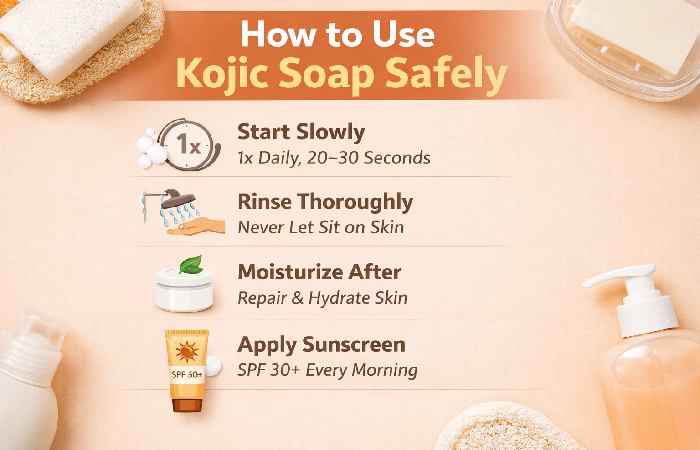
Beginner protocol
Once daily, 20–30 seconds contact
Follow with moisturizer
Mandatory SPF in daytime
Advanced users
Twice daily max
4–6 week cycles only
Never leave it on like a mask.
Kojic Soap vs Other Brightening Ingredients
| Ingredient | Best For | Irritation Risk |
|---|---|---|
| Kojic Acid | Pigment control | Medium |
| Vitamin C | Glow + antioxidant | Low |
| Niacinamide | Barrier + tone | Very Low |
| Alpha Arbutin | Gentle brightening | Low |
Soap is a support tool, not a full routine.
Best Kojic Skin Whitening Soap Brands (Formulation POV)
| Brand | Strength | Best For |
|---|---|---|
| Kojie San | High | Stubborn spots |
| Glutamax | Medium | Even tone |
| Skin Light | Medium | Beginners |
| Koji White | Low | Sensitive skin |
| Marie France | Medium | Body use |
Country-Wise Pricing & Availability (Beauty Niche Table)
| Country | Avg Price | Availability | Specialist View |
|---|---|---|---|
| Philippines | Low | Very High | Common OTC |
| India | Low–Mid | High | Caution advised |
| USA | Mid–High | Moderate | Short-term use |
| UK | High | Limited | Prescription alternatives preferred |
| Nigeria | Low | Very High | Popular for body use |
Specialist Perspective
Dermatologists generally agree:
Kojic soap is adjunct care, not first-line treatment
Short contact cleansers are safer than leave-on misuse
Long-term pigment issues need multi-ingredient routines
Authoritative bodies often cited include the American Academy of Dermatology, British Association of Dermatologists, and peer-reviewed dermatology journals.
Final Verdict: Is Kojic Skin Whitening Soap Worth It?
Yes—if your goal is controlled pigment fading, not skin bleaching.
No—if you expect dramatic whitening or ignore sun protection.
Used intelligently, kojic soap can help. Used carelessly, it backfires.
FAQs
Does kojic skin whitening soap permanently whiten skin?
No. It reduces excess pigment production temporarily and does not alter natural skin color.
How long does kojic soap take to show results?
Most users see mild improvement in 3–4 weeks with consistent sunscreen use.
Is kojic soap safe for daily use?
Yes, for short cycles. Long-term daily use increases irritation risk.
Can kojic soap darken skin?
Improper use can cause irritation leading to rebound pigmentation.
Is kojic soap better than vitamin C?
They serve different roles. Kojic targets pigment formation; vitamin C supports overall tone and barrier health.
Can men use kojic whitening soap?
Yes. Results depend on skin type, not gender.