
Table of Contents
Introduction
The modern beauty landscape has never been more exciting—or more overwhelming. Consumers are flooded with launches, viral products, and bold claims, yet still struggle with basics like choosing a reliable eyeshadow palette or knowing which brands to trust. This guide merges a practical, beginner‑friendly framework for choosing eyeshadow with five bigger shifts that are quietly redefining how beauty is made, marketed, and bought in 2026.
Key Takeaways
- The best eyeshadow palette for you balances pigment, blendability, wear time, and a cohesive shade story—not just brand name or price.
- High performance now exists at every price point; drugstore palettes often rival prestige options, so value depends on results, not logo.
- Consumers increasingly demand proof and transparency, from clear ingredients to visible testing and sustainability data.
- Algorithms and AI are shaping product development and recommendations, making launches more data‑driven and shopping more personalised.
- Beauty is becoming “phygital”: in‑store, social, and ecommerce journeys are connected through data to build smoother, more tailored experiences.
1. Proof Is the New Promise
The era of vague, aspirational marketing is fading. More shoppers want evidence: clear ingredients, credible testing, and honest performance data instead of hype and taglines. Recent consumer surveys across beauty and adjacent industries consistently show that a strong majority of people say they are more likely to buy—and even pay more—for brands they perceive as transparent and trustworthy.
To meet this demand, some brands are turning product pages into “digital passports” that show:
- Ingredient breakdowns and sourcing stories.
- Lab or clinical test summaries in plain language.
- Sustainability signals like approximate carbon or water impact.
Technologies already support this shift: QR codes link packaging to deeper product info; some early adopters experiment with blockchain‑based traceability; augmented reality tools are beginning to show more than just shade try‑ons, hinting at richer, context‑driven product storytelling. Transparency is becoming both an ethical stance and a commercial advantage.
2. Your Skincare Routine Is Becoming a Sport
Beauty is increasingly shaped by a performance mindset. Instead of thinking only about “anti‑ageing,” more people focus on prevention, protection, and recovery—mirroring how athletes think about training, performance, and rest. This shows up in:
- Barrier‑supporting moisturisers and SPF designed for sweat and outdoor use.
- Body care that talks about recovery, circulation, or muscle comfort.
- “Skincare‑powered makeup” that offers coverage plus skin benefits, like SPF and barrier‑friendly formulas.
At the same time, the nutricosmetics category—supplements positioned for skin, hair, and nails—is forecast to grow strongly over the next decade, with multiple industry reports projecting the global market to roughly double by the early 2030s. While exact numbers vary by source, the direction is clear: consumers increasingly see beauty as something nurtured from the inside out, not just applied on top.
3. The Price Tag Matters Less Than Performance
One of the most important shifts for everyday shoppers is that good performance now exists at every price point. The old luxury‑versus‑drugstore debate is less relevant when side‑by‑side tests often show budget products keeping up with—or outperforming—prestige names on pigment, wear, and ease of use.
You can see this clearly in eyeshadow:
- Affordable mini palettes like e.l.f.’s “Bite‑Size” range are frequently praised in independent reviews for strong pigment and smooth blending, especially given their very low price.
- Some higher‑priced palettes, including well‑known minis from prestige brands, get mixed feedback due to fallout or patchiness, despite their branding and packaging.
This doesn’t mean price never matters—luxury can still offer elevated packaging, more nuanced colour stories, or specific textures—but it does mean you can build a high‑performing routine without relying on expensive labels. A less‑discussed fact is that many drugstore and prestige labels share the same parent companies, which sometimes leads to similar formulations at different price tiers. The rise of “dupes” and viral budget alternatives shows that consumers are increasingly testing performance, not just paying for names.
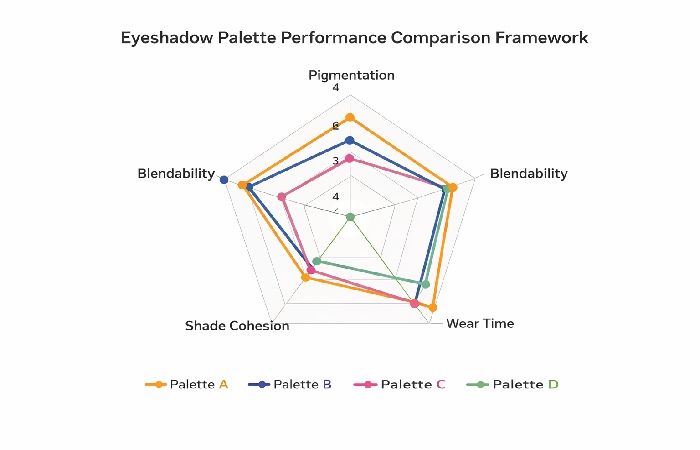
4. How to Evaluate Eyeshadow Palettes in 2026
Against this backdrop, choosing the best eyeshadow palette is less about chasing viral favourites and more about knowing what quality looks like. A practical framework for any palette in 2026:
- Pigmentation
Strong colour payoff should appear with a light tap, not heavy digging. Good pigment lets you build intensity without over‑working the eye area. - Blendability
Shades should diffuse smoothly without grabbing or going patchy. Seamless transitions between colours matter more than having dozens of shades you can’t blend. - Wear Time and Crease Resistance
On primed lids, good shadows stay visible and relatively crease‑free for most of the day. If a palette fades after a couple of hours, it is under‑performing, regardless of price. - Shade Range and Cohesion
For beginners, 9–12 well‑chosen shades usually beat mega‑palettes. Look for a clear mix of:- Light tones for highlighting.
- Mid‑tones for transitions and lids.
- Deeper shades for depth and liner.
- Ease of Use
Intuitive layout, clear shade names, sturdy packaging, and pan shapes that fit your brushes all contribute to a better learning experience.
When reading reviews, prioritise ones that show swatches, describe eye type (oily/dry lids, hooded or not), and mention both pros and cons.
5. Beginner‑Friendly Palette Examples (2026)
Here are a few palette types that align well with the framework above. They are examples, not an exhaustive ranking, and similar options exist from many brands and at multiple price points.
Neutral Everyday & Soft Glam
- Mid‑priced neutral quads and sextets
Many mid‑tier brands now offer compact palettes with:- 1–2 light mattes,
- 1–2 mid‑tone mattes,
- 1–2 shimmers for lid pop.
These tend to be user‑friendly, travel‑friendly, and versatile enough for office‑to‑evening looks.
- Drugstore 8–10 pan neutrals
Several drugstore lines produce warm‑neutral and rose‑neutral palettes that reviewers rate highly for daily wear. They may have slightly more fallout or less luxurious packaging than prestige options, but they often deliver perfectly acceptable results for most users.
Budget “Hidden Gems”
- Small, affordable palettes that focus on a tight colour story (e.g., all warm browns, or mauve‑roses) are ideal for beginners. These often get praised for punchy pigment and simple layouts, even if they lack the prestige name or heavy compact.
Skin‑Friendly or “Clean” Options
- Some brands emphasise gentler formulas (e.g., fewer fragrance or certain pigment types) or sustainability‑leaning packaging. If you have sensitive eyes, it can be worth prioritising these, while still applying the same performance criteria as above.
When comparing, focus on how real users describe pigment, blending, and wear rather than only relying on brand claims.
6. Choosing Palettes by Skin Tone, Undertone, and Eye Colour
You don’t need strict rules, but some guidelines help:
- Warm undertones
Gold, copper, bronze, and warm browns tend to harmonise naturally. Peach and terracotta transition shades often look flattering. - Cool undertones
Taupe, rose‑mauve, soft greys, and plummy browns usually sit nicely on cooler skin. - Neutral undertones
You can mix both families; look for palettes that balance warm and cool mid‑tones. - Brown and Hazel Eyes
Warm browns, bronzes, and khaki‑olive tones add depth. - Green and Blue Eyes
Plums, coppers, and soft oranges can make eye colour stand out.
These are starting points, not rules. Always check swatches on skin tones close to yours, where possible.
7. Algorithms Are Designing Your Next “Holy Grail”
Just as consumers are becoming more demanding, brands are relying less on instinct and more on data to decide what to launch and how to personalise it. Social platforms, review sites, and ecommerce search logs produce enormous datasets that can reveal:
- Which textures and shades are trending.
- What complaints are most common (e.g., fallout, oxidation, poor shade range).
- Which combinations of attributes (vegan, long‑wear, specific finish) drive repeat purchases.
Studies in consumer goods and retail show that data‑driven product development can significantly improve launch success rates compared to purely intuition‑driven approaches. Beauty is following suit:
- Shade‑matching tools analyse thousands of profiles and photos to recommend foundation and concealer.
- Routine builders suggest skincare and makeup combinations based on concerns, climate, and previous purchases.
For consumers, this means new products are increasingly personalised and predictive—more likely to fit your needs the first time and less likely to be random bets. It also means you should treat algorithmic recommendations as helpful starting hints, not unquestionable truth; your own skin, preferences, and testing still matter.
8. The Beauty Counter Is Everywhere—and Connected
The classic department‑store counter is now only one part of a much wider “phygital” experience. A typical path to your next eyeshadow palette or foundation might include:
- Watching a TikTok or YouTube review with swatches and wear tests.
- Using a virtual try‑on tool on a brand site or retail app.
- Reading user reviews and Q&A on marketplaces like Amazon or local beauty ecommerce sites.
- Swatching in‑store, then ordering online during a promotion.
Virtual try‑on and AR experiences have been shown, in multiple case studies, to lift conversion rates by noticeable, often double‑digit percentages, because they help shoppers visualise shades before buying. Social commerce is also growing rapidly; reports forecast that social‑driven beauty sales will reach tens of billions of dollars annually in the next few years across major markets.
Leading retailers are working toward a more unified customer profile, where in‑store shade matches and online browsing feed into one system to power better recommendations and promotions. In practice, many brands are still far from a perfect “digital twin” of each shopper, but the direction of travel is clear: more connected data, less friction, and a smoother journey between inspiration and purchase.
9. Practical Application Tips That Still Matter
Even in a highly tech‑driven, data‑optimised beauty world, basic technique can make more difference than the logo on your palette.
- Prime your lids
A good eyeshadow primer or a thin layer of concealer set with powder improves grip and wear, particularly on oily lids. - Build in thin layers
Start with small amounts and build intensity slowly to avoid harsh lines and fallout. - Use a mid‑tone transition shade
Apply a mid‑tone matte slightly above the crease as your first layer; it makes later blending of deeper shades much easier. - Choose the right tools
A fluffy blending brush for softening edges, a flat shader for packing shimmer, and a small detailing brush for liner work will cover most needs.
10. FAQs: Beauty’s Future and Better Palettes
1. Are expensive palettes always better?
No. Many affordable palettes now offer pigment, blendability, and wear that rival prestige options. Evaluate performance and reviews, not just branding.
2. How many shades does a beginner really need?
Around 9–12 well‑chosen shades are usually enough to create multiple looks without causing decision fatigue.
3. How can I tell if a brand is truly transparent?
Look for clear ingredient lists, straightforward claims, explanations of testing, and consistent behaviour across channels—not just one sustainability badge.
4. Will AI fully replace human creativity in beauty?
Unlikely. Algorithms help identify patterns and gaps, but human creators still set the emotional tone, storytelling, and aesthetic vision.
5. Can one palette work for day and night?
Yes, if it includes a mix of light mattes, mid‑tones, and a few deeper or shimmer shades. Technique and placement then do the rest.
The future of beauty is becoming more transparent, data‑driven, and performance‑oriented, but your personal preferences, budget, and day‑to‑day needs still sit at the centre. By combining a clear evaluation framework with an awareness of the bigger shifts reshaping the industry, you can choose palettes—and brands—that genuinely work for you in 2026 and beyond.
Disclaimer
This article is for educational and informational purposes only and does not constitute professional dermatological, medical, or financial advice. Product examples and trends referenced here are based on publicly available information, editorial reviews, and market analyses at the time of writing, and they may change as new data, launches, and studies emerge. Always patch‑test new products, consult qualified professionals for personalised skin or health concerns, and verify current prices, availability, and claims directly with brands or authorised retailers before purchasing.
Author Bio
Mohammed Sarvar Shareef is a content strategist and SEO‑driven writer with 5+ years of experience creating high‑intent content across technology, health, beauty, and marketing. Drawing on a background in data‑informed keyword research and on‑page optimization, Sarvar specialises in turning complex topics into clear, actionable articles that both rank and convert. His work spans product guides, industry trend analysis, how‑to resources, and brand storytelling for blogs, agencies, and SaaS companies, with a strong focus on user trust, evidence‑based insights, and long‑term organic growth.